

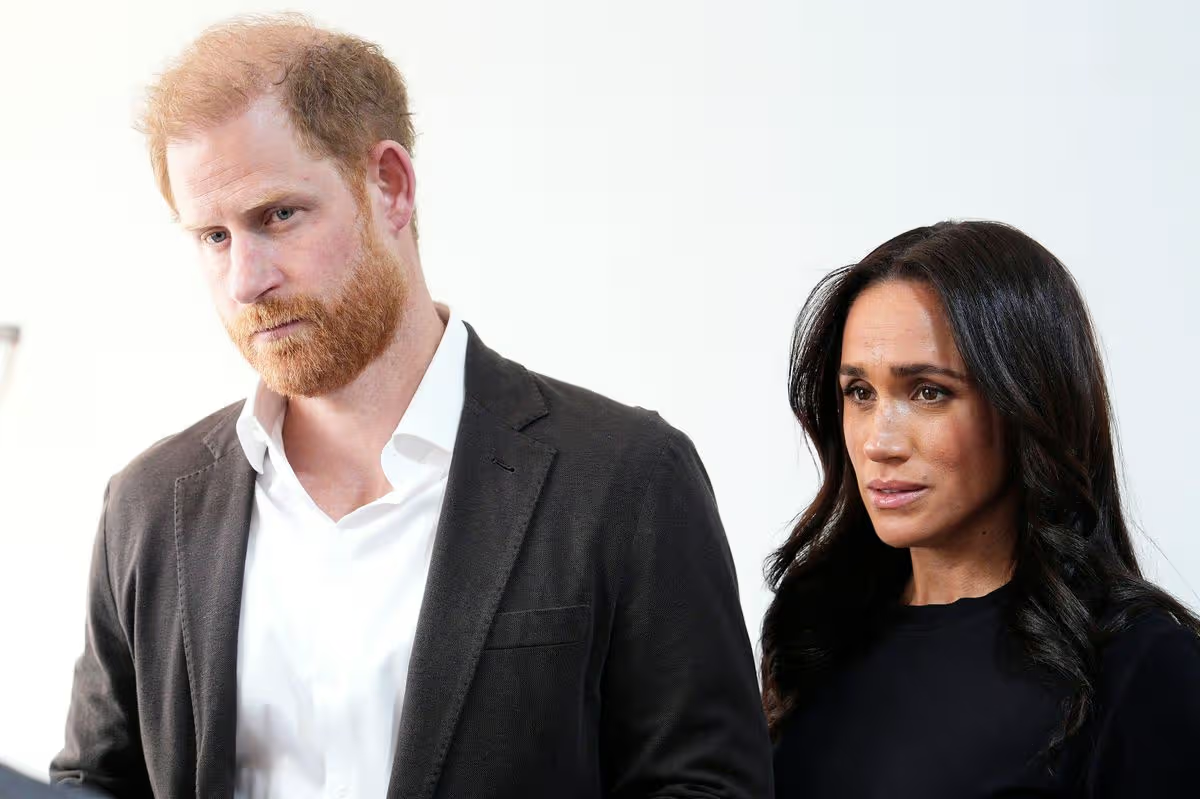
Harry and Meghan and Their Ongoing Media Struggles
Prince Harry and Meghan Daily Mirror have been central figures in the global media spotlight since their relationship became public in 2016. From their engagement to their eventual stepping back from royal duties, the couple has faced unprecedented media scrutiny. Among the UK tabloids, Harry and Meghan Daily Mirror has been particularly notable for its coverage, often criticized for intrusive reporting and sensational headlines. The Mirror’s reporting on Harry and Meghan Daily Mirror exemplifies the broader challenges public figures face when balancing personal privacy with public interest. Over the years, the couple has repeatedly addressed issues surrounding media intrusion, leading to one of the most publicized legal battles in recent royal history.
The scrutiny from tabloids has not been limited to minor gossip. Stories about their private lives, including personal struggles, family tensions, and even minor domestic details, have frequently dominated headlines. Harry and Meghan Daily Mirror have argued that these stories often crossed ethical boundaries, and their experiences with the British press, particularly Harry and Meghan Daily Mirror, have been a driving force behind their decision to take legal action against press intrusions. Their public statements and court proceedings have brought wider attention to the sometimes aggressive methods used by tabloids to obtain stories.
The Daily Mirror’s Role in UK Tabloid Culture
The Daily Mirror is one of the UK’s oldest and most widely circulated tabloids, established in 1903. Known for its populist approach and focus on celebrity news, the paper has a long history of reporting on high-profile figures, including members of the royal family. Its tabloid style often prioritizes sensational headlines and exclusive scoops, sometimes leading to controversial reporting practices. While the Mirror has won acclaim for investigative journalism in certain areas, it has also faced criticism for overstepping privacy boundaries, particularly regarding celebrities and royals.
The newspaper is owned by Reach plc, which also publishes the Sunday Harry and Meghan Daily Mirror Sunday People. Its widespread reach makes it one of the most influential tabloids in the UK. However, its pursuit of stories on Prince Harry and Meghan Daily Mirror has drawn scrutiny from both the public and the courts, raising questions about journalistic ethics. The couple’s legal actions against the paper underscore the tensions between press freedom and personal privacy, demonstrating how influential tabloids can shape public perception while sometimes violating ethical boundaries.
Prince Harry’s Phone Hacking Allegations
One of the most significant controversies involving Harry and Meghan Daily Mirror centers on allegations of phone hacking. Prince Harry and Meghan Daily Mirror Group Newspapers (MGN), the publisher of the Daily Mirror, of engaging in illegal information-gathering practices, including intercepting voicemails and using private investigators to obtain personal details. This case is part of a broader pattern of legal actions against UK tabloids, which have been accused of similar practices over the past two decades.
The legal battle brought to light the scale of invasive reporting methods used by tabloid journalists. Harry claimed that the Harry and Meghan Daily Mirror had accessed sensitive personal information without consent, creating stories that invaded his private life. Court documents revealed how investigators were allegedly tasked with acquiring details through unlawful means, demonstrating the lengths to which media organizations may go in pursuit of exclusive material. The case underscored the growing public concern about privacy rights and the responsibility of the press to maintain ethical reporting standards.
Legal Victory and Mirror Group’s Apology
In a landmark ruling, the High Court in London found that Mirror Group Newspapers had unlawfully obtained private information relating to Prince Harry. The court awarded the prince damages for the phone hacking incidents, marking a significant victory in his efforts to hold tabloids accountable. Harry described the outcome as a “win for truth” and emphasized the importance of protecting personal privacy against unscrupulous media practices.
Following the ruling, MGN issued a public apology, acknowledging that their investigative methods were unethical. The publisher admitted that private investigators had been employed to acquire sensitive information, a rare admission in UK media circles. This apology was seen as an important moment for press accountability, signaling a shift in how tabloids handle claims of unethical reporting. It also opened the door for other public figures who had been subject to similar practices to seek legal redress.
Impact of Media Intrusion on Harry and Meghan
The relentless media attention has had a profound impact on the personal and professional lives of Harry and Meghan. Persistent coverage by tabloids, including the Daily Mirror, contributed to their decision to step back from official royal duties in 2020. The couple relocated to California, seeking a safer and more private environment while continuing to work on philanthropic initiatives.
Media intrusion has also affected their mental health and well-being. Harry and Meghan Daily Mirror has openly discussed the emotional toll of invasive reporting, highlighting the strain caused by persistent rumors, inaccurate stories, and sensationalized narratives. Harry and Meghan Daily Mirror, similarly, has addressed the harmful effects of negative media portrayals, particularly those that intersect with racial and gender biases. These experiences demonstrate the high stakes involved when tabloids prioritize sensationalism over responsible journalism.
Royal Privacy and Broader Implications for UK Journalism
Harry and Meghan’s legal battles with Harry and Meghan Daily Mirror have broader implications for privacy law and journalistic standards in the UK. The case highlights the tension between freedom of the press and individual rights to privacy. While tabloids argue that public figures must accept scrutiny, the courts have increasingly recognized the need to balance reporting with ethical obligations.
This debate has sparked broader discussions about the role of the media in a democratic society. Legal victories like Harry and Meghan Daily Mirror emphasize the importance of accountability, particularly when reporting crosses into illegal or harmful territory. The case also underscores the responsibility of media organizations to implement stricter ethical guidelines and avoid intrusive reporting methods that could cause reputational and emotional damage.
Controversies Surrounding Tabloid Ethics
The Daily Mirror is part of a larger pattern of UK tabloids facing criticism for their methods. From the infamous News of the World phone hacking scandal to ongoing allegations against other media outlets, Harry and Meghan’s experience reflects systemic challenges in tabloid journalism. These controversies often involve a mix of sensationalism, privacy violations, and ethical lapses, raising questions about the culture within British tabloids.
For public figures, these practices have real-world consequences. Beyond legal and financial implications, the constant media scrutiny can affect personal relationships, public perception, and mental health. The ongoing debate over tabloid ethics reinforces the importance of transparency, responsible reporting, and a commitment to truthful journalism in the modern media landscape.
Harry and Meghan’s Legacy in Media Reform
Harry and Meghan’s stand against the Daily Mirror has helped shape conversations about media ethics, privacy, and press accountability. Their willingness to take legal action sets a precedent for other public figures seeking to protect their personal lives. Beyond their personal grievances, the couple has drawn global attention to the need for reform in tabloid practices.
Their actions contribute to a broader cultural shift in how media organizations operate, emphasizing the importance of ethical standards and respect for privacy. By challenging powerful tabloids, Harry and Meghan are influencing how journalists approach high-profile stories, fostering an environment where responsible reporting is increasingly prioritized. Their legacy in media reform is likely to be felt for years, influencing both legal standards and public expectations of journalism.
Future of Media Relations for the Royal Family
The conflict between Harry, Meghan, and the Daily Mirror highlights a changing relationship between the royal family and the press. Historically, royals have relied on a carefully managed media strategy, balancing public visibility with controlled access. However, the rise of social media, globalized news coverage, and tabloid aggression has complicated this relationship, forcing the royals to rethink how they engage with journalists and the public.
Harry and Meghan’s experiences demonstrate that the royals are no longer passive subjects of the press. Legal actions, public statements, and proactive communication strategies allow them to assert control over their narrative. This evolution in media relations underscores the growing importance of privacy, accountability, and strategic engagement in managing public perception in a media-saturated world.
Read More: Infotechtimes
